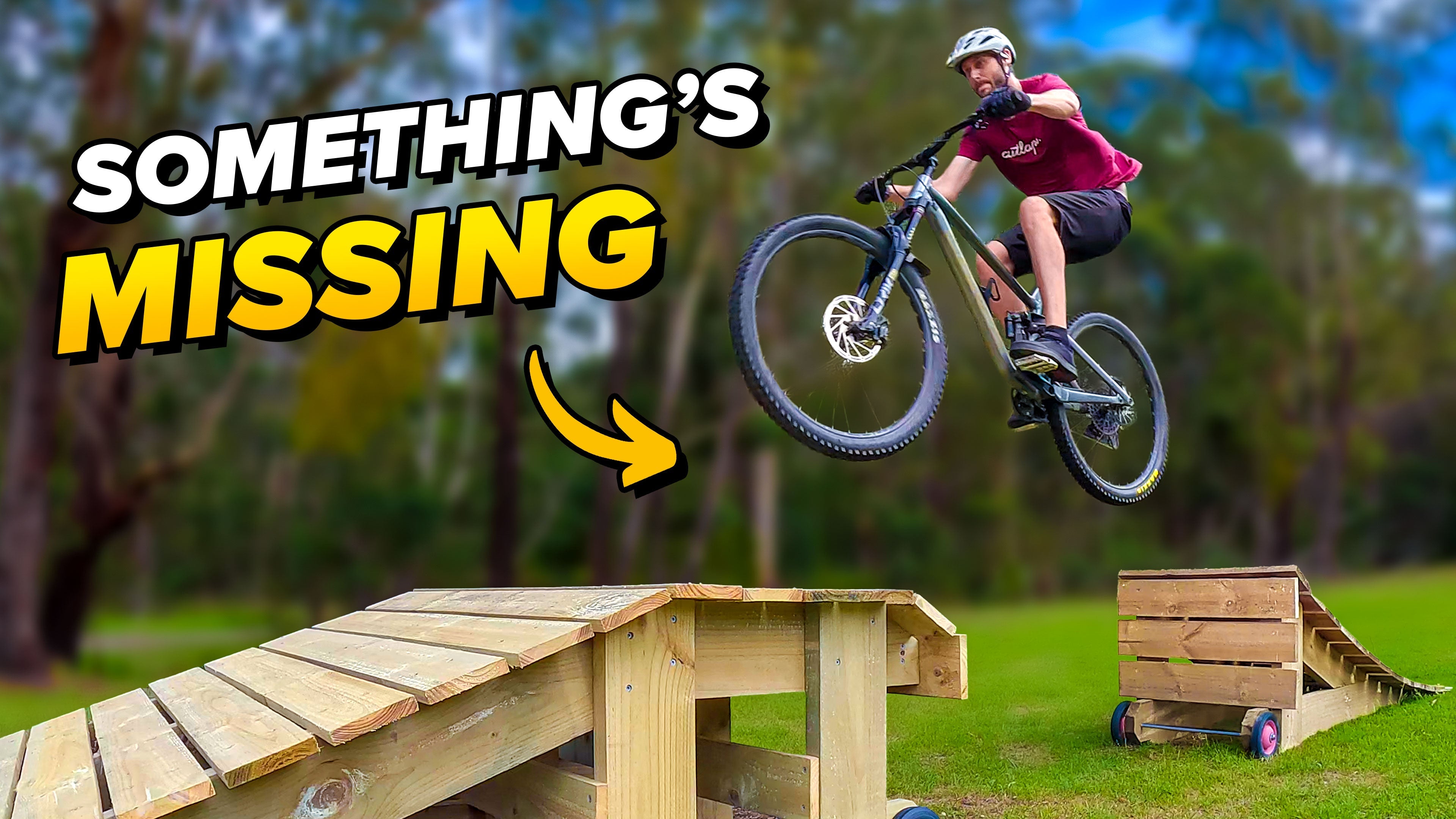
Looking for how to build a bike jump in your backyard?
In this guide, I’ll show you exactly how to build a wooden backyard bike jump and matching landing that lets you start small, build confidence and safely increase the gap over time.
Watch the full build video below to see the entire process step-by-step.
This setup has already been built by over a thousand riders and is designed to be strong, weather-resistant and fully progressive.
Why Most Backyard Bike Jumps Don’t Work
One of the biggest mistakes people make when building a backyard bike jump is landing too flat.
If you only build a kicker ramp and ride to flat ground, every impact goes straight into your legs and bike. That makes progression harder and reduces confidence.
A proper landing solves that problem.
How to Build a Wooden Bike Jump (The Kicker)
Materials Needed
- H4 treated pine sleepers (for outdoor durability)
- Rough sawn slats for decking
- Marine ply for a smooth base transition
- Structural screws
- Threaded rod and wheels
Step 1: Mark the Radius
The most important part of building a bike jump is marking the curve correctly.
This kicker uses a 5.23 metre radius. The radius determines how smooth the jump feels.
- A tight radius feels abrupt.
- A larger radius feels smoother and more predictable.
You can use a peg and string method to mark a clean curve before cutting.
Step 2: Cut and Assemble the Frame
Cut the curved side pieces, vertical supports and bracing. Assemble the structure using structural screws to ensure it feels solid and stable.
Step 3: Add Wheels for Progression
Adding wheels turns your backyard bike jump into a progression tool. You can push the ramp closer to the landing to start small, then move it back as your confidence grows.
Step 4: Install the Decking
Screw down rough sawn slats and add marine ply at the base. Once installed, the decking stiffens the entire structure.
How to Build a Bike Jump Landing
If you’re serious about building a safe backyard bike jump, you need a proper landing.
Why Build a Wooden Landing?
- Reduces impact when landing
- Makes progression safer
- Removes the need for a dirt pile
- Keeps your backyard clean and adjustable
Step 1: Build a Strong Structure
The landing uses treated pine sleepers and includes a third centre truss to absorb impact.
Step 2: Improve Ground Contact
Cut grooves into the base so the landing sits flat even if the ground isn’t perfectly level.
Step 3: Secure with Structural Screws
Use proper length screws and bracing. The decking adds significant strength once installed.
Step 4: Add Wheels
The landing is heavy, so wheels make it manageable to move into place or pack away.
How This Backyard Jump Setup Helps You Progress
The beauty of this system is progression.
Push the kicker right up to the landing and you’ve essentially got a small tabletop you can roll over.
As your confidence grows, move the kicker back and increase the gap.
This allows beginners and experienced riders to use the same setup safely.
Download the Free Bike Jump Plans
You can download the exact kicker and landing plans here:
Frequently Asked Questions
What timber should I use to build a bike jump?
Use treated pine sleepers designed for outdoor exposure. H4 treated timber is ideal for long-term durability.
What radius should a bike jump be?
A smoother jump typically uses a larger radius. This build uses a 5.23 metre radius for predictable takeoff.
Can I build a bike jump without a dirt landing?
Yes. A properly built wooden landing provides a clean, adjustable alternative to a dirt mound.
Is this backyard bike jump suitable for beginners?
Yes. The progression design allows you to start small and increase the gap gradually.
If you want to see the full build in action, make sure you watch the video at the top of this page.